Plastic. Our archnemsis. So hard to avoid, and so difficult to recycle. Most sources estimate that only about 10% of plastic produced globally is recycled. And plastic can only survive a couple of uses before it has to be downcycled (used for less specific materials, such as composite park benches or decking). That is, plastic water bottle cannot be recycled endlessly to make new plastic water bottles (unlike aluminum cans, which can [ha!]).
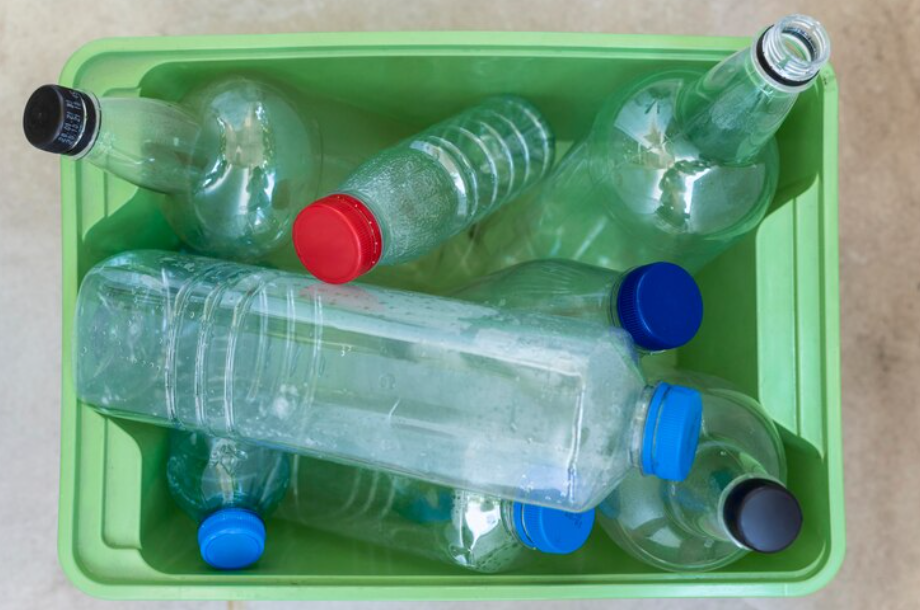
The easiest plastics to recycle are #1, #2, and #5 bottle, jugs, and tubs.
#1, #2, #5 Bottles, Jugs, Tubs, and Cups
If it has one of the above numbers and fits one of the above shapes and is larger than 2"x2", you can recycle it at the locations below. Leave the lids on for bottles, jugs, and tubs. For cups, leave the lid on if it is the same type of plastic as the cup. Putting lids loose in the bin will result in them falling through the machinery and not actually being recycled.
Recycle these items:
- in your curbside bin
-
at Full Circle Sustainability as part of the "standard recycling" program
Note that clamshells (e.g., strawberry containers) may have a #1, #2, or #5 on them, but they are not recyclable in curbside recycling programs. Here's why. Plastic bags are sometimes also numbered #2, but they are not recyclable in curbside programs either.
#3-4, 6-7 Rigid Plastic Containers
Any rigid plastic container numbered #3, 4, 6, or 7 that's larger than 2"x2" can be recycled at:
Sometimes styrofoam has a number on it. Unfortunately that does not make it recyclable with other plastics. Sometimes plastic bags have a number on them, but bags must be recycled separately to avoid getting caught in standard sorting eqipment.
Non-Containers and Small Pieces of Rigid Plastic
If your plastic (1) does not have a number on it, (2) has a number but is not a container, or (3) is smaller than 2"x2", the only way we know to recycle it is at:
3D Printer Filament
You can recycle 3D printer filament at Full Circle Sustainability as part of the paid TerraCycle program. You can also send in to Printerior for recyling. The program is free, but you will need to pay the cost of shipping (or drop it off at their site in St. Louis).