Plastic - Flexible
Plastic - Flexible
Plastic bags pose all sorts of problems. Around 5 trillion are produced globally each year, and only 1% are recycled. A big part of the problem is that they can't be recycled in standard recycling facilities. They get clogged in the machinery, causing the whole line to shut down. We've never heard of a curbside recycling program that accepts them.
Fortunately, most supermarkets take back plastic grocery bags as well as a wide variety of other plastic bags, films, and wraps. These are often downcycled to produce plastic decking, park benches, and playground equipment. Flexible plastics that can't be recycled at grocery stores can be recycled (for a fee) through TerraCycle programs.
"Stretchy" Plastic
This includes:
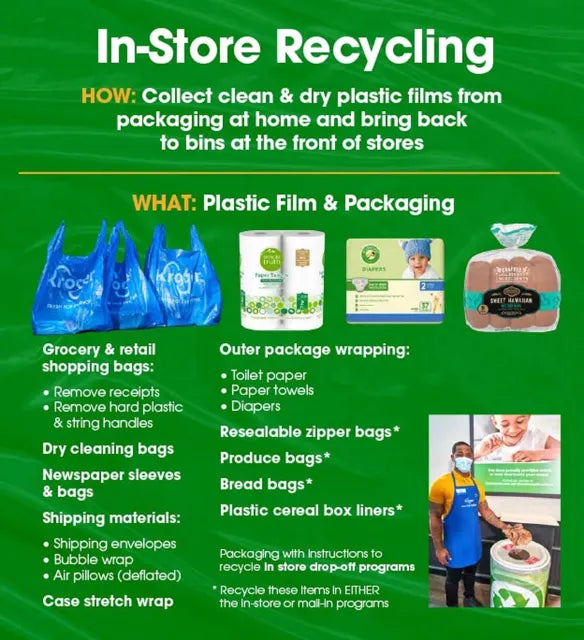
- Grocery, produce, and bread bags
- Newspaper and dry cleaning bags
- Wrap from around toilet paper, packages of water bottles, etc.
- Six-pack rings
- Bubble wrap and plastic mailers
- Case stretch wrap
- Cereal box liners
Recycle these items for free at:
- Grocery store drop-off bins
- Nex-Trex drop-off bins
- Full Circle Sustainability
Note that this does NOT include compostable plastic bags. They are not made of petroleum and cannot be recycled with other plastics.
Here is a great resource from NexTrex, a major recycler of plastic bags and film, that will help answer specific questions about what counts as "stretchy" plastic.
"Crinkly" Plastic
If it doesn't meet the descriptions above, you can't recycle it through store drop-off programs, even if it has a recycling symbol on it. Any plastic packaging not included above can be recycled at:
- Full Circle Sustainability as part of the free and paid TerraCycle programs
Pet food bags (any brand) or Kroger-branded packaging can be recycled for free at Full Circle. All other "crinkly" plastics fall into the paid TerraCycle category.
Share

Recent blog posts
View all-
Saving the Seconds
You've probably heard the statistics on food waste in the U.S.—that upwards of 40% of food we grow never gets eaten. Some of that responsibility lies with the consumer, but...
Saving the Seconds
You've probably heard the statistics on food waste in the U.S.—that upwards of 40% of food we grow never gets eaten. Some of that responsibility lies with the consumer, but...
-
A Bulk Bin Update
About a year ago, we took a trip to Arkansas to purchase a set of bulk food bins. We'd found a great deal from a natural food store that was...
A Bulk Bin Update
About a year ago, we took a trip to Arkansas to purchase a set of bulk food bins. We'd found a great deal from a natural food store that was...
We clean up after ourselves.
Ecommerce deliveries have a carbon footprint. That's why we support verified projects that remove carbon from the air.
Every delivery’s carbon footprint is calculated based on weight, shipping method, and distance traveled. We neutralize these emissions by purchasing verified carbon removal credits from groundbreaking projects.
With your purchase, you’ll join a community of proactive merchants and customers dedicated to a sustainable future. Together, we've removed emissions for over 82 million deliveries and removed over 57 thousand tonnes of carbon.
We work with a network of pioneering carbon removal companies that have been vetted by the commerce platform Shopify.
STAY IN THE LOOP
Join our newsletter for the latest on this week's veggies, new products and producers, and other goings-on! We'll also share profiles of our partner producers and send you tasty recipes to try with the items in the Weekly Veggie Box.